Walk into most commercial buildings in Calgary today, and you'll notice something different at the entrance.
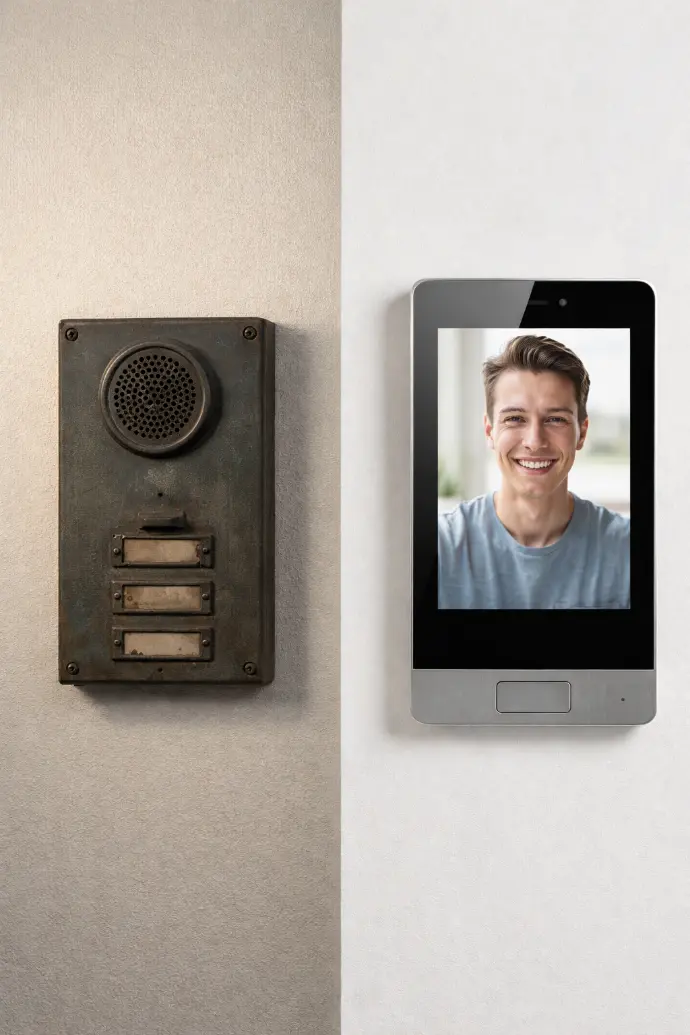
The old audio-only buzzer system is gone. In its place: a sleek touchscreen display with video verification, multiple credential options, and integration capabilities that would have seemed like science fiction a decade ago.
This isn't a luxury upgrade anymore. It's becoming the baseline standard for commercial properties—and the shift is happening faster than most people realize.
From Audio Buzzers to Video Verification
The traditional intercom was simple. A visitor buzzed up, you heard their voice, and you made a judgment call based on what they said.
"I'm a UPS driver."
You buzzed them in.
The problem? You had no way to verify if that person was actually a delivery driver or someone looking for unauthorized building access. In cities dealing with increased homelessness and security concerns, that audio-only system creates real vulnerability.
Modern smart intercom systems eliminate that guesswork.
Video verification lets building managers and tenants see exactly who's at the door before granting access. You can confirm the UPS uniform. You can verify the person matches the service appointment. You can make informed decisions instead of blind ones.
The Real Selling Point: Touchscreens and Credential Flexibility
Integration with door operators matters. But that's not what's driving adoption.
The biggest draw? The user experience.
These newer systems feature high-resolution touchscreen displays that look modern and feel intuitive. They support multiple credential types:
- Smartphone access via Bluetooth or NFC
- Facial recognition
- Traditional key cards
- QR codes for temporary access
- PIN codes
Building occupants expect to use their phones for everything else. Why should building access be different?
The technology aligns with how people actually want to interact with buildings today.
Tenant Expectations Are Shifting Fast
Commercial tenants now expect smart intercom systems as standard infrastructure, not premium add-ons.
Here's why:
Buildings are moving away from open-door policies during business hours. Security concerns—particularly unauthorized entry by homeless individuals in urban centers—have pushed property managers toward secured-by-default access models.
But tenants still need their clients to reach them easily.
Smart intercom systems solve this. Each business unit gets an affordable indoor monitor. The receptionist can buzz visitors into the building and grant elevator access to specific floors—all from their desk.
The entire visitor journey gets managed from one interface.
For multi-tenant buildings, this granular control matters. A communications firm handling sensitive client information needs tighter access restrictions than a general office tenant. Modern systems let property managers customize security levels floor-by-floor, tenant-by-tenant.

Temporary Access Without the Headache
Property managers used to dread coordinating access for service providers.
You'd issue a code to a plumber. Then worry about changing it after the job is finished. Then they hope the technician didn't share it. Track down who still had access weeks later.
Smart intercom systems eliminate that entire administrative burden.
Property managers can now generate QR codes with specific parameters:
- One-time use or limited number of entries
- Defined time windows (e.g., 9am-5pm on Tuesday)
- Automatic expiration after the allotted period
The process is simple. Get the technician's email address. Set the access parameters. The system automatically sends the QR code to their phone.
When that plumber scans the code at the door, the property manager receives a push notification confirming arrival time. This creates an audit trail for tracking service delivery and verifying contractor attendance.
No more "the plumber said he showed up" disputes.
You have time stamped proof of exactly when access was granted and used.
Proactive Security Across Building Portfolios
The adoption pattern is telling.
It's not just high-security facilities or large buildings implementing these systems. Property managers across all building types—small, large, medical, financial, general office—are installing smart intercoms.
The common denominator? Security concerns.
Building managers in Calgary report a shift from reactive to proactive security management. Instead of waiting for an incident—a kicked-in door, a storage room break-in, a stolen bicycle—they're getting ahead of potential problems.
When one building in a portfolio experiences a security issue, smart property managers immediately evaluate their other properties. They recognize the same vulnerabilities exist across their holdings.
The cost of security incidents adds up fast:
- Replacing damaged locks and doors
- Filing incident reports
- Managing tenant complaints about stolen property
- Dealing with insurance claims
- Addressing liability concerns
These headaches pull property managers away from higher-priority work. Investing in proactive security through smart intercom systems buys peace of mind and operational efficiency.

The Infrastructure Question: Wiring and Wireless Options
Before you install a smart intercom system, evaluate your building's existing infrastructure.
Wiring is the critical factor.
Older buildings often lack the structured wiring needed for advanced systems. Running new wiring throughout a building can significantly increase project costs and complexity.
The good news? Wireless options exist.
LTE-based systems communicate through cellular networks instead of requiring hardwired internet connections. You install an LTE receiver and transmitter, and the system connects to the internet wirelessly.
This flexibility opens up smart intercom possibilities for virtually any building, regardless of age or existing infrastructure. Property managers working with diverse portfolios—mixing modern and legacy buildings—can standardize on smart systems without massive renovation projects.
Right-Sizing the System to Building Needs
Not every building needs every feature.
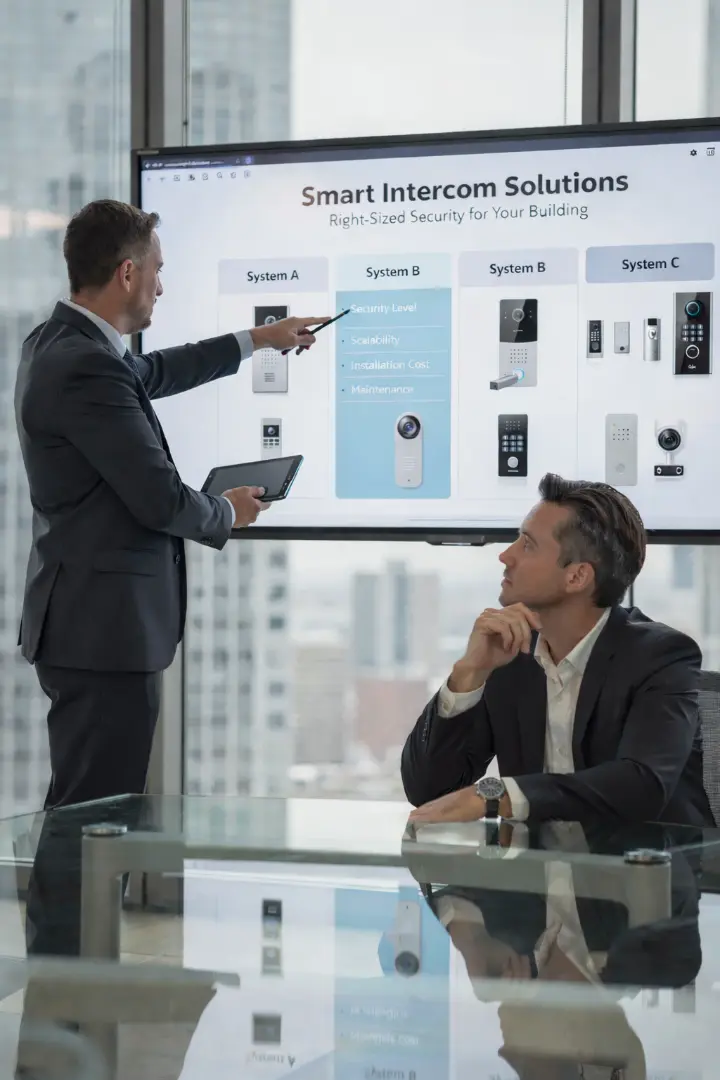
Smaller buildings often don’t require full video verification or complex integrations like HVAC. The key is aligning system capability with real security needs and budget.
HVAC integration is still uncommon and typically limited to large high-rise or enterprise-managed buildings.
Video verification, however, is gaining rapid adoption—particularly in properties with higher security requirements or a history of incidents.
The smart approach is to start with the features that solve today’s problems and expand over time as needs evolve.
What This Means for Building Owners
Smart intercom systems are transitioning from nice-to-have to must-have infrastructure in commercial buildings.
Tenant expectations are rising. Security concerns are intensifying. The technology is more accessible and affordable than ever.
If you're managing commercial property in 2025, evaluate your current access control systems. Ask yourself:
- Can tenants verify visitor identity before granting access?
- Do you have granular control over who can access specific floors?
- Can you issue temporary credentials without administrative headaches?
- Does your system create an audit trail for accountability?
- Are you meeting tenant expectations for modern building access?
The buildings that adapt quickly gain competitive advantage. The ones that wait risk falling behind tenant expectations and exposing themselves to preventable security incidents.
The standard is changing.
Smart intercom systems aren't the future of commercial buildings. They're the present.