I've been helping businesses modernize their security systems, and I keep seeing the same mistake.
Small business owners treat AI-powered CCTV like it's just a better camera. Sharper image. Clearer footage. Maybe some fancy features.
They're missing the fundamental shift.
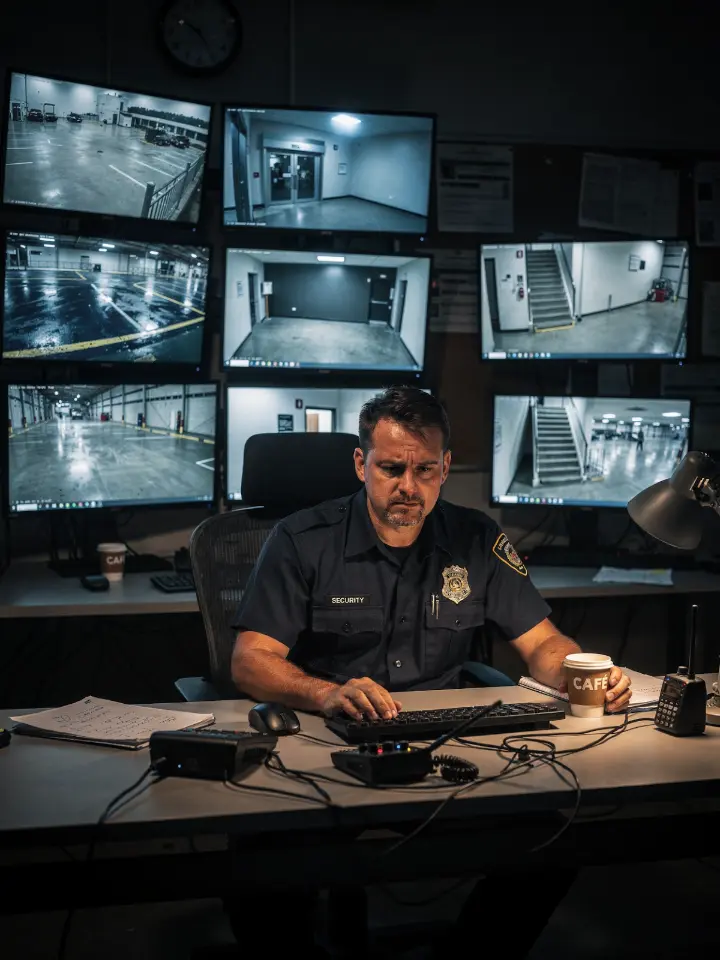
Traditional CCTV systems create a false sense of security. You install cameras, record everything, and assume you're protected. But here's what actually happens: humans can't watch 8+ hours of footage effectively. Security teams suffer from alert fatigue when motion sensors trigger on every car, tree branch, or shadow.
The numbers tell the story. Over 94% of burglar alarms in retail environments are false alarms. Video surveillance systems aren't much better. Operators get dozens of alerts for minor movements, forcing them to sift through endless footage.
By the time you review the tape, the incident is over. The perpetrator is gone. You have evidence, but the damage is done.
That's reactive security. And it's costing businesses more than they realize.
What AI Actually Does Differently
AI-powered CCTV systems don't just record. They analyze, identify, and act in real-time.
Here's how it works in practice:
The camera sees someone approach a restricted area after hours. Within seconds, AI analyzes the video feed and identifies this as unusual activity. The system immediately lights up the area, flashes red and blue lights, and delivers a verbal warning through the camera speaker.
"Hey, you're not supposed to be here. You're being recorded."
The system even describes what the person is wearing. This creates the psychological impression that a real human is watching. Most people engaged in suspicious activity don't stick around once they know they've been spotted.
I worked with a doctor's office in a tough neighborhood. They dealt with constant break-in attempts from people looking for medication. Windows broken. Locks damaged. The doctor was spending thousands on repairs.
We installed AI cameras with proactive deterrence features.
The incidents stopped.
Not reduced. Stopped. The doctor was so impressed he bought additional cameras to cover more of the property.
The Business Intelligence You're Missing
Security is just the starting point. AI cameras provide operational insights that traditional systems can't touch.
People counting: Track foot traffic patterns throughout the day. You'll know exactly when your business is busiest so you can staff accordingly. One retailer discovered they were overstaffed in the morning and understaffed during their actual peak hours.
Familiar face detection: If you've had a shoplifter, you can upload their photo to the system. When that person returns, you get an instant alert. You can intervene before they steal again or call the police while they're still on the premises.
Package detection: The system monitors deliveries. It alerts you when a package arrives and notifies you if someone removes it. This alone has saved businesses from porch pirates and internal theft.
Smart automation: Cameras can trigger other systems. Someone walks into a dark hallway, the lights turn on automatically. This improves both security and customer experience.
These aren't theoretical benefits. The AI video surveillance market grew from $6.51 billion in 2024 to a projected $28.76 billion by 2030. That's a 30.6% annual growth rate. Businesses are adopting this technology because it delivers measurable results.

Implementation Reality Check
You're probably wondering about the complexity. Good news: implementation is straightforward.
AI cameras need internet connectivity to communicate with the server. You connect a network switch to your existing internet infrastructure. The cameras plug into that switch, which powers them. Then you link everything to a platform like Alarm.com.
Now you have an integrated system. The AI cameras work alongside traditional security features like door sensors and motion detectors. Everything runs through one dashboard.
Training takes about 15 minutes. The apps are intuitive with built-in help resources. If you run into issues, you can find answers directly in the app.
Small to medium businesses love this simplicity. An owner can easily add managers to the account so they receive security notifications. No complicated setup. No dedicated IT staff required.
A common concern I hear is how facial recognition works and whether it aligns with privacy expectations and Canadian privacy laws. The reality is that from the moment someone leaves their home until they return, their image is captured multiple times throughout the day. Doorbell cameras, traffic systems, retail security, and other public-facing cameras are now widely used. Camera presence in public and semi-public spaces has become a routine part of modern life.
Privacy concerns, while understandable, don't change the fact that surveillance is already everywhere.
Measuring What Matters
Traditional security systems are hard to measure. You know you have cameras. You hope they deter crime. But you can't quantify the value.
AI systems give you concrete KPIs:
False alarm reduction: AI-powered filtering reduces false positives by up to 99.95%. You stop wasting time on non-threats and focus on real security events.
Response time improvement: Real-time alerts mean you can respond to incidents as they happen, not hours later when you review footage.
Incident prevention rate: Track how many potential break-ins were deterred by proactive warnings. The doctor's office went from multiple incidents per month to zero.
Operational efficiency gains: Measure how people counting data helps you optimize staffing levels and reduce labor costs.
One study found that AI-driven threat detection reduces response time by over 100 days compared to traditional systems. That's the difference between preventing a breach and cleaning up after one.

The Integration Mistake
Here's where most businesses go wrong: they think about security in silos.
Electronic security over here. Physical security over there. Door locks separate from cameras. Access control disconnected from alarm systems.
This creates gaps. An integrator might know exactly where to aim cameras and where to place access controls. But do they understand security as a whole?
Physical security matters. Are your door locks working properly? Is egress configured correctly? Do your electronic and mechanical security systems work together or against each other?
The most effective implementations combine both. A locksmith who understands electronic integration. An integrator who knows mechanical security. When these perspectives merge, you get comprehensive protection instead of partial solutions. At 310LOCK, their technicians are trained in both mechanical security as well as electronic security.
What To Do This Week
Run a three-step assessment of your current security setup:
1. Identify your problem areas. Where do incidents happen? Back shipping yards where people jump fences? Dumpsters where people dump refuse after hours? Front entrances with broken glass? Write down every location that causes security headaches.
2. Calculate your incident cost. How much do you spend on repairs, replacements, and insurance claims? How much revenue do you lose when operations are disrupted? False alarms cost U.S. businesses an estimated $3.2 billion in 2022. What's your number?
3. Evaluate your response capability. When something happens, how long does it take you to know about it? How long to respond? If you're reviewing footage after the fact, you're operating reactively.
If your answers reveal security gaps, it may be time to work with a security professional who can help address them. Solutions such as AI-enabled cameras can provide a more proactive approach to video security by improving detection, visibility, and response to potential issues.
The technology isn't coming. It's here. Businesses that adopt proactive security now will prevent incidents their competitors are still documenting after the fact.
The question isn't whether AI security works. The data proves it does. The question is whether you'll implement it before or after your next security incident.
I know which option costs less.
Still relying on reactive security?
Book a security systems assessment with 310LOCK and find out how AI-powered surveillance and physical security should actually work together.